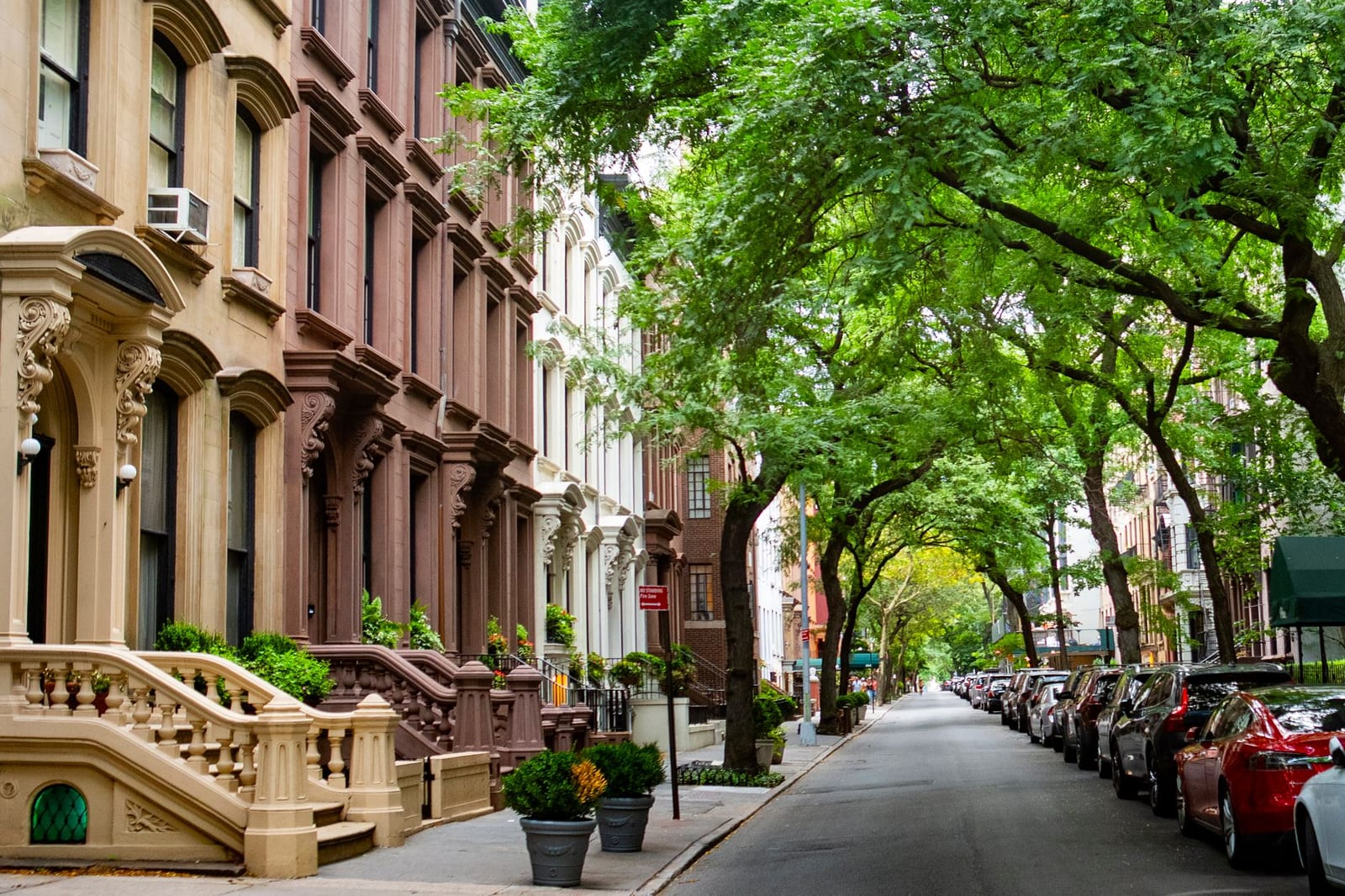
A Tribeca loft sits inside a converted cast-iron or brick warehouse building — structures built in the 1860s–1920s for textile and food storage, not residential living, and rezoned for housing beginning in the 1970s–1980s. That history means the building carries infrastructure — deep basements, loading docks, shared utility risers — that a purpose-built residential building doesn't, and pests use it the same way regardless of how high-end the individual unit is.
We treat the active problem in the unit, then look at the building-level factors — shared risers, basement conditions, loading-dock proximity — that are actually driving it. A recurring maintenance option is worth considering in buildings like these, where shared infrastructure means new pressure can arrive from elsewhere in the building even after a unit is fully treated.
Because Tribeca's building stock skews toward shared industrial infrastructure rather than standalone residential construction, a genuinely thorough inspection here looks past the unit's own walls.
Residential pest control in NYC: what the law and the research say
Under NYC's Asthma-Free Housing Act (Local Law 55 of 2018), owners of buildings with three or more apartments must keep units free of pests — including mice, rats and cockroaches — inspect at least once a year, and use Integrated Pest Management to fix the conditions that let pests in. Renters can hold a landlord to this standard, and a licensed treatment record helps document the request. (NYC HPD — Indoor Allergen Hazards (Mold and Pests), Local Law 55 of 2018)
Cockroaches and mice are common household asthma triggers; the CDC advises controlling them by removing food and crumbs and cleaning often, and specifically warns to "avoid using sprays and foggers as these can cause asthma attacks" — a key reason we favour targeted baiting over broadcast spraying in occupied homes. (CDC — Controlling Asthma)
The US EPA describes Integrated Pest Management (IPM) as "an effective and environmentally sensitive approach to pest management" that uses methods posing "the least possible hazard to people, property, and the environment" — prevention, exclusion and monitoring first, with targeted treatment only where it is actually needed. (US EPA — Integrated Pest Management (IPM) Principles)
A controlled trial in New York City apartments found units receiving IPM had significantly lower cockroach counts at 3 months, and roughly 60% lower cockroach-allergen (Bla g 2) levels in beds at 6 months, than untreated units — direct evidence that the prevention-first approach works in real NYC housing. (Environmental Health Perspectives (2009) — IPM in NYC public housing)
Targeted (IPM) vs spray-only pest control in an occupied home
| Targeted / IPM | Spray-only | |
|---|---|---|
| Approach | Find and seal entry points + sources, treat where needed | Broadcast pesticide across surfaces |
| Pesticide in the home | Minimised — baits + targeted application | Higher and repeated |
| Asthma / allergen risk | Lower — foggers and sprays avoided indoors | Foggers and sprays can trigger attacks (CDC) |
| How long it lasts | Longer — the way pests got in is closed off | Pests return once the spray breaks down |
How much does residential pest control cost in NYC?
$40–$900
One-time visit: $150–$500 (varies further by home size, e.g. $250–$450 at 1,000 sq ft up to $450–$750 at 3,000 sq ft). Monthly plan visit: $40–$70. Quarterly plan: $100–$300/visit or $400–$900/year. Initial/first visit under a plan often $150–$300 (sometimes waived on annual contracts).
| One-time visit | $150–$500 per visit |
| Monthly plan | $40–$70 per visit |
| Quarterly plan | $400–$900 per year |
US national figure — NYC typically runs higher.
Market range — not our quote
This is a market range synthesised from published cost guides — not a quote from this provider. The actual price depends on an in-person or photo-based inspection.
US national anchor (ThisOldHouse); direct fetch of Angi's NY-geo-targeted page returned HTTP 403 so its exact NYC figure could not be independently confirmed beyond search-snippet level — treated with extra caution.
What drives the price
- Plan type (one-time vs monthly vs quarterly vs annual contract)
- Home/apartment size
- Infestation severity (mild $100–$500, moderate $300–$700, severe $1,000–$8,000)
- Contract discount (annual contracts sometimes 10–15% below month-to-month)
Signs you have a home pest control problem
- Pest activity that seems disconnected from the unit's own cleanliness or condition
- Issues that return after a DIY treatment or store-bought product
- Activity near shared risers, basement access, or building utility areas
- A new purchase or move-in where you want the loft checked before problems start
Why Tribeca sees this
Tribeca's residential buildings are converted 19th-century cast-iron and brick warehouse and factory structures, rezoned for housing beginning in the 1970s–1980s — a building history that shapes where pests actually live and travel.
Shared basements, loading docks, and utility risers in this housing stock mean a thorough residential inspection has to look past the individual unit.
Proximity to Hudson River Park and the Greenwich Street dining corridor adds outdoor and food-service-adjacent pest pressure to ground-floor and basement spaces in the neighbourhood.